Choosing a compact composter for the kitchen helps turn everyday scraps into usable compost without clutter or smells. This guide highlights five reliable small options, ranging from passive countertop bins to smart electric models. Each product section includes key features, so you can compare size, odor control, and ease of cleaning at a glance. A quick summary table follows the intro to help you skim the essentials before diving into detailed reviews.
| Product | Capacity | Best For | |
|---|---|---|---|
| Utopia Kitchen Indoor Compost Bin | 1.3 gal | Staying on the counter | Charcoal filter |
| Epica Countertop Compost Bin | 1.3 gal | Minimal maintenance | Activated charcoal filter |
| MERIOR 4L Electric Composter | 4 L | Fast, high-volume waste | Odor-control system |
| Ouaken Electric Countertop Composter | 4 L | Quiet, odor-free operation | Large carbon filter |
| OXO Good Grips Easy-Clean Bin | 0.75 gal | Simple, daily use | Odor-locking lid |
Note: All products are designed for kitchen use and emphasize odor control, ease of cleaning, and compact footprints suitable for apartment or small-home living.
Utopia Kitchen Indoor Compost Bin Review

The Utopia Kitchen bin offers a practical 1.3-gallon capacity, making it suitable for daily kitchen scraps without occupying precious counter space. Its stainless steel construction resists scratching and dents, contributing to long-term durability. Odor management relies on a charcoal filter system designed to trap smells before they escape, enabling discreet placement on the counter. The bin is described as easy to clean, a key factor for everyday use. This model works well for households that prefer a simple, passive approach to composting rather than a full-fledged electric unit.
Key features at a glance: 1.3-gallon stainless steel body, odor-control charcoal filter, easy cleaning, and a compact footprint. The design prioritizes longevity and a clean appearance in modern kitchens, making it a popular choice for those who want a straightforward, low-maintenance option.
Epica Countertop Compost Bin Review

Epica’s 1.3-gallon countertop compost bin is recognized by major outlets, underscoring its status as a trusted kitchen waste solution. The unit uses an airtight lid and replaceable activated-charcoal filter to curb odors efficiently, keeping your cooking area fresh. Its one-piece molded construction resists leaks and rust, which helps maintain a clean interior and exterior. Cleanability is a highlighted benefit, as a smoother interior reduces residue buildup. This bin is well-suited for households needing a low-maintenance, odor-neutral option with a touch of premium branding.
Highlights include compact dimensions (about 11 inches tall, 7.16 inches in diameter), natural odor control, and a design that minimizes leaks while simplifying cleaning and maintenance.
MERIOR 4L Electric Composter Review

The MERIOR 4L electric countertop composter introduces a smart, compact solution for busy kitchens. With a 4-liter capacity, it handles daily food waste efficiently, claiming up to a 90% reduction in waste volume and turning it into dry compost in 3–6 hours. The unit features a three-mode LED display, an auto-clean option, and a reminder system to indicate remaining composting time. A six-blade churning system enhances processing speed, and the product notes that it can handle tougher scraps, including bones, according to user guidance. This model suits households seeking a fast, semi-automated composting cycle with visible status indicators.
Key considerations: electric operation, faster turnaround, built-in cleaning, and a compact footprint. It combines convenience with odor suppression through a dedicated filtration approach, though it may require regular filter maintenance and occasional component care.
Ouaken Electric Countertop Composter Review

Ouaken’s 4-liter electric composter emphasizes odor control with a large carbon filter and low-noise operation—designed for quiet performance under 40 dBA. The device dries, grinds, and cools waste using high-temperature processing to reduce volume by up to 90% in around three hours. The system provides status alerts when filter replacement is needed, helping maintain odor-free performance over time. This model is suitable for kitchens that want a modern, low-dirt, low-smell approach to turning scraps into fertilizer for gardens or potted plants.
Considerations include energy usage, filter lifecycle, noise level, and the convenience of auto-clean and timer features. It is ideal for households prioritizing speed and odor control in an electric format.
OXO Good Grips Easy-Clean Compost Bin Review
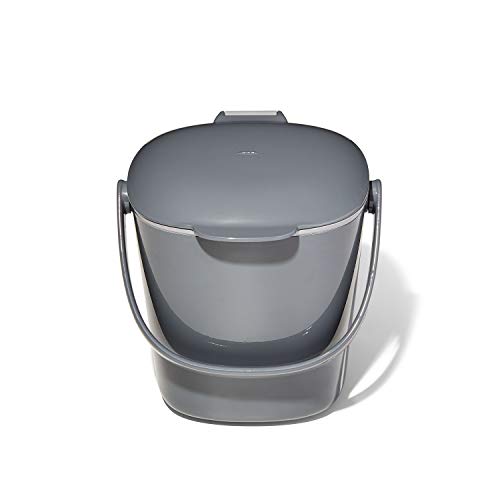
The OXO Good Grips bin focuses on ease of daily use, with a lid that flips up for filling and seals to lock in odors. Its interior walls are smooth to prevent food from sticking and creating lingering smells. The compact, 0.75-gallon size makes it an unobtrusive option for smaller kitchens, while the lid design helps maintain a fresh countertop presentation. For households seeking a simple, durable, and easy-to-clean passive option, this bin provides reliable odor control and straightforward maintenance.
Important factors include overall capacity, lid design, ease of cleaning, and the balance between visibility of waste and odor containment in a small footprint.
Barnyard Designs Compost Bin For Kitchen Counter Review
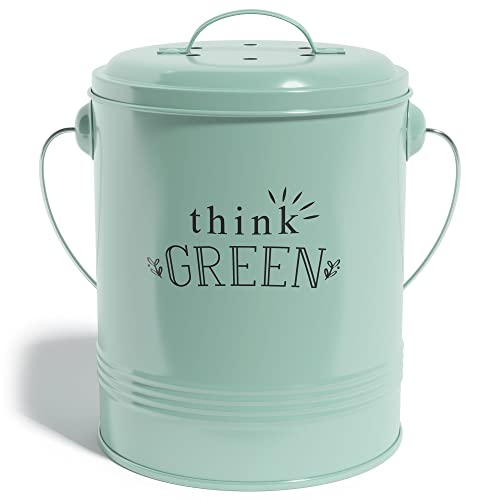
Barnyard Designs offers a 1.2-gallon counter-top compost bin with a focus on odor control through extra filters and an inner bucket for easy cleaning. The outer shell is rust-proof, and the inner bucket is dishwasher-safe, making cleanup convenient. The design includes a lid with fresh airflow to improve aeration and help prevent smells from accumulating in the kitchen. This option is well-suited for households prioritizing straightforward cleaning routines and a more traditional look for kitchen decor.
Perfnique Kitchen Compost Bin Review

Perfnique’s 1.3-gallon countertop bin includes an inner liner and two activated carbon filters to block odors. The plastic inner pail is removable for easy disposal, and a built-in handle on the liner simplifies emptying. The lid allows the unit to double as a decorative farmhouse-style piece when not in use, while maintaining a fresh kitchen environment. Filter replacement is recommended approximately every 4–6 months for continued odor control. This option suits users who want a compact, aesthetically pleasing bin that remains practical for daily use.
Buying Guide: Key Purchase Considerations
- Capacity and footprint: For small kitchens, aim for 1–2 gallons (4–8 L) of capacity and a footprint that fits on a counter or under a cabinet without crowding food prep areas.
- Odor control: Look for activated-charcoal filters, airtight lids, or carbon filtration systems. Filter replacement frequency impacts long-term odor management and cost.
- Construction and cleaning: Stainless steel and high-quality plastics resist corrosion and staining. Detachable inner buckets or smooth interior surfaces simplify cleaning and daily use.
- Electric vs. non-electric: Electric models offer faster processing and sometimes auto-cleaning, but require power access and filter maintenance. Non-electric bins rely on manual composting timelines and odor controls.
- Maintenance and replacement parts: Check availability and cost of filters, inner buckets, and replacement components. Some brands offer bundled extras, like extra filters or liners.
- Compatibility with your goals: If you plan to compost outdoors or in a separate system, you may prioritize easy emptying and portability. If you want a ready-to-use indoor option, look for odor-absorbent features and simple disposal.
- Aesthetics and kitchen style: Choose a design that complements your kitchen décor, especially if the bin will be visible on countertops or near dining areas.
- Budget considerations: Electric models with fast processing usually cost more and require ongoing maintenance, while passive bins are lower cost but slower to process.
When selecting a small kitchen composter, balance capacity, odor control, and cleanup ease with your daily routine. For most homes, a 1.3 gallon to 2 gallon passive model provides a practical blend of usability and anti-odor performance. Electric options add speed and automation, but may require ongoing filter care and electricity use. The right choice depends on how quickly you produce compostable waste, where the bin will live, and how much effort you want to invest in maintenance.