Rose care blends beauty with careful pest management. This guide highlights five trusted products that target common rose pests and diseases while supporting healthy growth. Learn how each option works, what it protects against, and how to apply for best results. Whether you’re battling aphids, beetles, or fungal diseases, you’ll find practical, plant-friendly approaches here.
| Product | Brand | Notes |
|---|---|---|
| BioAdvanced Rose and Flower Insect Killer | BioAdvanced | Insect killer with 14-day protection; suitable for roses and gardens |
| BioAdvanced All-in-One Rose & Flower Plant Care | BioAdvanced | Insecticide and fungicide combo; guards against pests and diseases |
| BioAdvanced Disease Control for Roses, Flowers and Shrubs | BioAdvanced | Systemic disease protection |
| Bonide Captain Jack’s Rose Rx 4-in-1 | Bonide | Neem oil-based, four-in-one protection |
| Bonide Rose Shield Systemic Rose & Flower Drench | Bonide | Systemic protection around the base |
BioAdvanced Rose And Flower Insect Killer

Features include contact-kill action against 100+ insects, including aphids, caterpillars, whiteflies, and Japanese beetles. Provides up to 14 days of protection on roses, flowers, and vegetable gardens. This Ready-to-Use spray is designed for outdoor use and offers quick relief from common rose pests, helping to maintain vibrant blooms with minimal effort.
BioAdvanced All-in-One Rose & Flower Plant Care

This Ready-to-Use solution combines an insecticide and fungicide to protect roses and other outdoor plants. It guards against diseases such as black spot, powdery mildew, rust, and scab, while killing aphids, whiteflies, and adult Japanese beetles. Suitable for roses, flowers, and vegetable gardens, it offers a broad-spectrum approach for healthier plants with fewer applications.
BioAdvanced All-In-One Rose and Flower Care (Granules)

These granules act as both plant fertilizer and pest/disease control. They promote strong roots and blooms while protecting against pests like aphids and whiteflies and diseases such as black spots and powdery mildew. Granular application allows for steady nutrient delivery and pest deterrence over time, supporting robust rose health.
Bonide Captain Jack’s Rose Rx 4-in-1

Rose Rx blends neem oil with clarified hydrophobic extract to provide four protective roles: insect and mite control, disease mitigation, and preventative coverage against common fungal issues like rust and powdery mildew. It also repels pests such as beetles, aphids, and caterpillars, making it a versatile option for organic-minded gardeners aiming to reduce chemical inputs.
BioAdvanced Disease Control For Roses, Flowers And Shrubs

This systemic fungicide protects against a range of diseases, including black spot, powdery mildew, rust, and crabapple scab. The systemic action means plants absorb the product, providing protection from within the tissues and continuing to defend against infections even after rain exposure. Suitable for roses, flowers, shrubs, and even some houseplants, it enhances resilience and bloom quality.
BioAdvanced All-In-One Rose And Flower Care Fertilizer
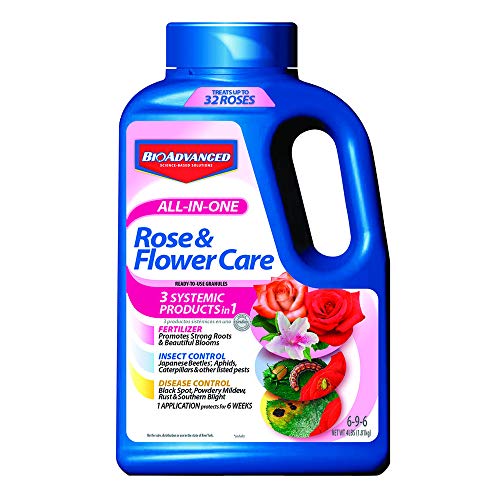
This granular fertilizer promotes strong roots and vibrant blooms for roses, hibiscus, irises, and other listed flowers. It also includes an insect-killer component to help shield plants from common pests such as aphids, whiteflies, and adelgids, while contributing to disease control with continued plant nutrition for better resistance and bloom quality.
Bonide Rose Shield Systemic Rose & Flower Drench

This systemic drench delivers six weeks of protection from insects and disease when applied around the base of plants. It protects roses and nearby perennials, helping shield against Japanese beetles, borers, aphids, black spot, powdery mildew, and rust. The convenient drench format minimizes spray drift and apportioning errors for larger garden beds.
Buying Guide: Key Purchase Considerations For Rose Pest Control
- Target pests and diseases: Identify whether your roses face insect pressure (aphids, beetles, mites) or fungal diseases (black spot, powdery mildew). Choose products with broad-spectrum or disease-specific action as needed.
- Mode of action: Decide between contact sprays, systemic drenches, granules, or combined solutions. Systemic products offer longer protection but may take longer to move within the plant, while contact products provide immediate knockdown.
- Coverage and concentration: For larger rose beds, consider concentrate formulas or ready-to-use options based on your maintenance pace. Check label recommendations for number of plants covered per bottle or per bag.
- Safety and compatibility: Look for products labeled safe for outdoor gardening and compatible with other garden practices. For organic preferences, prioritize neem oil-based or fully organic-approved formulations.
- Seasonality and timing: Begin applications at the onset of visible pest activity or disease signs. Reapplication intervals vary (e.g., every 7–14 days or after rain) depending on product type and label.
- Resistance management: Alternate products with different active ingredients to delay pest resistance and maintain effectiveness over time.
- Environmental impact: Favor products with lower environmental footprint when possible and follow label directions to minimize runoff or non-target effects.
Selected products provide a spectrum of options—from quick-contact insect killers to systemic disease protectants and organic-friendly formulations. Proper selection and timely application support healthier roses with more abundant, vibrant blooms while reducing pest-related stress and disease pressure.