Finding an effective backpack sprayer for pest control helps protect your lawn, garden, and crops from insects while avoiding excess chemical use. The following selections combine durable construction, comfortable design, and reliable spray performance. This guide compares five popular models to help American homeowners choose a sprayer that fits their pest-control needs, from weed management to home garden protection.
Summary of chosen products:
| Product | Brand | Tank Capacity | Key Benefit |
|---|---|---|---|
| REALWORK 4-Gallon Backpack Sprayer | REALWORK | 4 gal | Padded straps and chemical-resistant components |
| Battery Powered Backpack Sprayer – 4.2 Gallon | NPGLOBAL | 4.2 gal | Adjustable pressure, translucent tank |
| PetraTools 4 Gallon Battery Backpack Sprayer | Petra | 4 gal | Long battery life, comfortable fit |
| VAXMAY 4 Gallon Backpack Sprayer | VAXMAY | 4 gal | Makita battery compatibility, multiple nozzles |
| ALIENTABI 4-Gallon Battery Backpack Sprayer | ALIENTABI | 4 gal | Two pressure settings, extended run time |
REALWORK 4-Gallon Backpack Sprayer

The REALWORK 4-Gallon Backpack Sprayer focuses on user comfort and reliable operation for pest control and plant care. The funnel top supports easy filling, while the semi-transparent tank makes it simple to monitor remaining fluid. Features include a high-efficiency pump with chemical-resistant seals, a built-in pressure release valve, and a locking trigger for extended spraying sessions. The kit also includes padded shoulder straps to reduce fatigue and a reinforced flexible hose with a chemical-resistant wand for consistent application. This model is suited for homeowners handling routine garden pests or weeds around borders and vegetable plots.
Battery Powered Backpack Sprayer – 4.2 Gallon

The NPGLOBAL model pairs a 4.2-gallon translucent tank with a high-pressure spray hose and a wide range of working pressure from 21.8 PSI to 100 PSI. Its kit includes a stainless steel telescopic lance and a convenient trigger with a safety lock. The translucent tank helps avoid overfilling and lets users see the solution level at a glance. Padded shoulder straps are designed for long use, and the integrated carry handle facilitates transport between tasks. This sprayer is appropriate for pest control in larger yard spaces or garden borders where efficient coverage matters.
PetraTools Battery Powered Backpack Sprayer 4 Gallon

PetraTools offers a long-life 4-gallon battery-powered backpack sprayer featuring 6 spray nozzles and substantial battery life. The HD4000 system delivers 6–8 hours of operation per charge and can pump over 200 gallons before recharging. The unit emphasizes user comfort with double-padded straps and a back pad, and it includes a squeeze handle with a locking feature to minimize fatigue during extended pest-control sessions. PetraTools has positioned the model as a robust choice for large lawns, farms, or multi-area management where consistent power and reliability are essential.
VAXMAY Battery Powered Backpack Sprayer

The VAXMAY sprayer emphasizes Makita 18V battery compatibility, a digital voltage display, and battery-discharge protection for extended life. It supports up to 16 tanks per charge and ships with a 2.6Ah battery and a charger. A 110-240V charger enables flexible recharging, while the 39.3-inch telescopic wand helps reach high or distant targets. The sprayer includes five nozzles and an adjustable nozzle to tailor spray patterns, making it suitable for pest control tasks across lawns, gardens, and crop rows where precision matters.
ALIENTABI Battery Backpack Sprayer
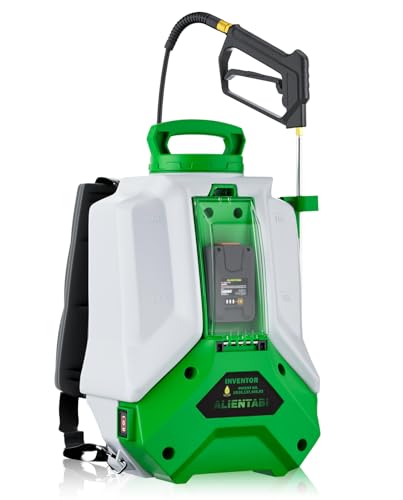
ALIENTABI’s 4-gallon battery backpack sprayer targets affordability without compromising runtime. The unit offers two pressure settings at 36 psi and 65 psi, enabling a balance between fine misting and stronger spray for pests or weeds. The design uses a Viton-sealed, extended-thread stainless-steel wand to deliver consistent output. Users can spray for over two hours on a single charge and can manage reach up to 26 feet with the wand. This model is well-suited for homeowners who need a cost-effective option for routine garden maintenance.
SideKing Battery Powered Backpack Sprayer
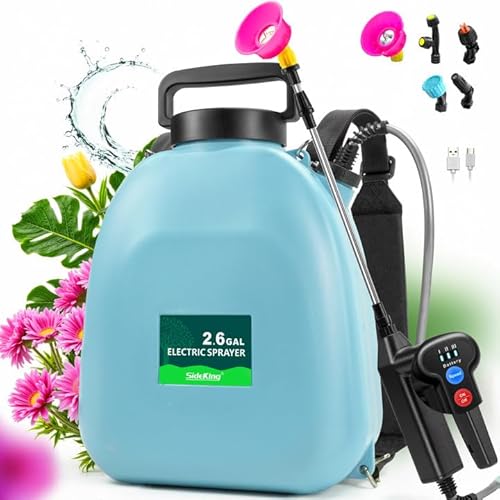
The SideKing model provides a compact 2.6-gallon capacity with three adjustable pressure levels and five nozzles. A 4000mAh lithium battery powers up to 2–3 hours of continuous spraying, with USB-C charging and a real-time battery display to avoid mid-job power loss. The 41-inch telescopic wand facilitates reaching high spots, while multiple nozzle options support versatile pest-control applications, from misting delicate plants to targeted weed killers. It’s a practical option for small-to-medium yards and garden beds.
Buying Guide: Key Purchase Considerations
When selecting a backpack sprayer for pest control, consider the following factors to ensure a fit with your property and tasks:
- Tank capacity: Larger lawns or farms benefit from 4-gallon models for fewer refills, while smaller spaces can suffice with 2.6–3 gallon options.
- Power source: Battery-powered units minimize manual effort but check run-time per charge, charging options, and compatibility with existing tools (especially if you use Makita or similar batteries).
- Pressure and nozzle options: Adjustable PSI ranges and multiple nozzles help tailor spray patterns for pests, weeds, or delicate plants. Look for at least 20–100 PSI ranges for versatility.
- Comfort and ergonomics: Padded straps, back padding, and a secure wand prevent fatigue during extended spraying sessions. A wide shoulder strap design can reduce stress on hips and shoulders.
- Material durability: Chemical-resistant seals, hoses, and wands extend life when spraying pesticides or weed killers. HDPE or similar tank materials resist cracking and chemical degradation.
- Maintenance: A simple pump design, accessible filters, and easy-clean components reduce downtime. Consider models with replaceable parts and readily available accessories.
- Safety features: Trigger locks, pressure relief valves, and battery indicators help manage risk during handling and storage.
Alternative perspectives include evaluating total cost of ownership (initial price plus replacement parts), weight distribution for different body types, and compatibility with existing battery ecosystems. For users managing large properties, models with longer run times and higher flow rates can improve productivity, while casual users may prefer lighter, easier-to-maneuver units with straightforward operation.